

What sludge does to a heating system
Over the years, the inside of steel radiators slowly corrodes. The result is a black sludge called magnetite, and it ends up everywhere: settled in the bottom of radiators, narrowing pipes and coating the inside of your boiler. The boiler has to work harder to push heat round, it gets noisier, and parts like pumps and heat exchangers fail sooner than they should.
Signs your system needs a flush
- Radiators warm at the top but cold at the bottom
- Dark brown or black water when you bleed a radiator
- Banging, gurgling or kettle-like noises from the boiler
- Heating that takes ages to warm the house
- Repeated pump or boiler faults
How we power flush a system
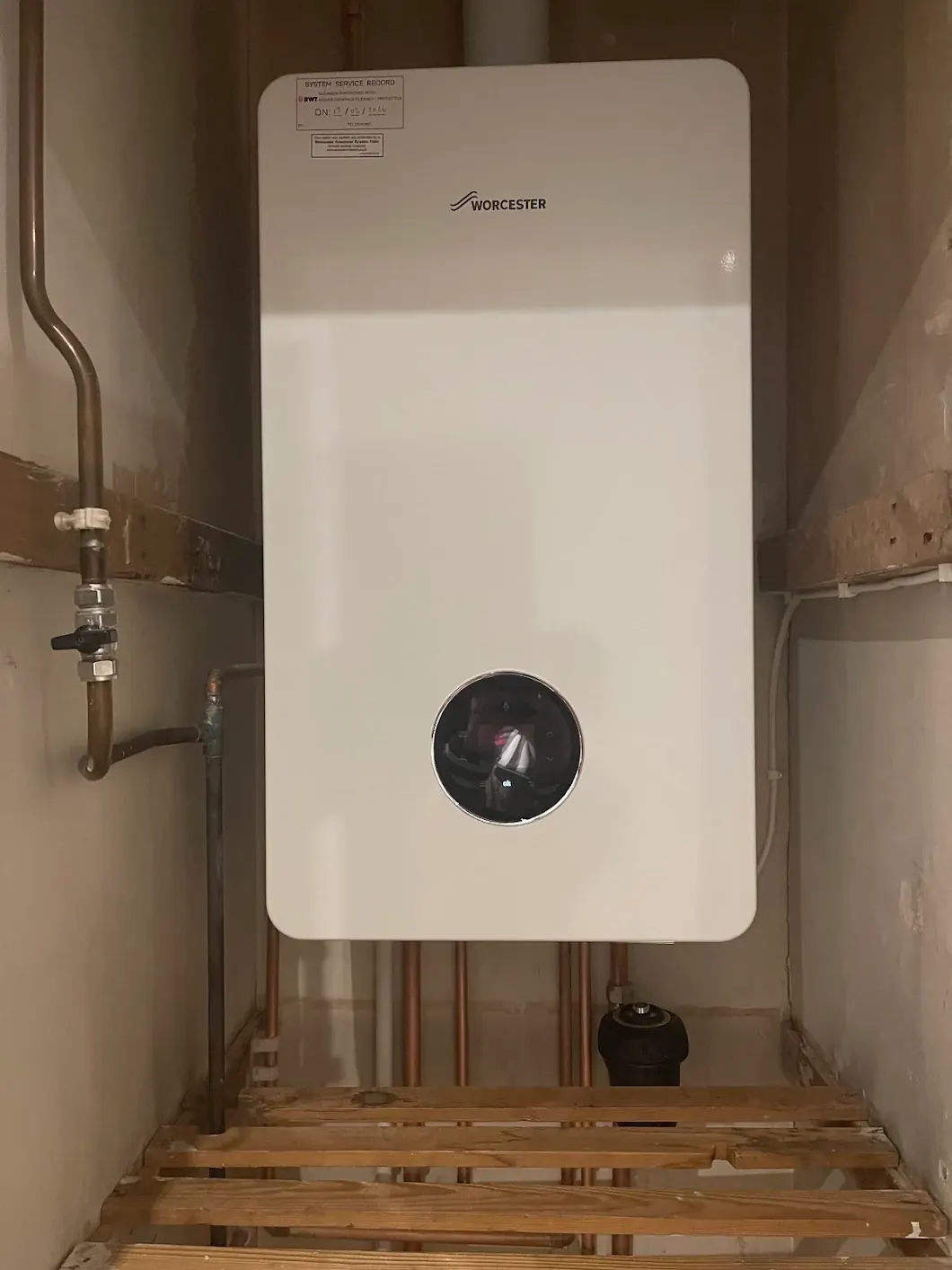
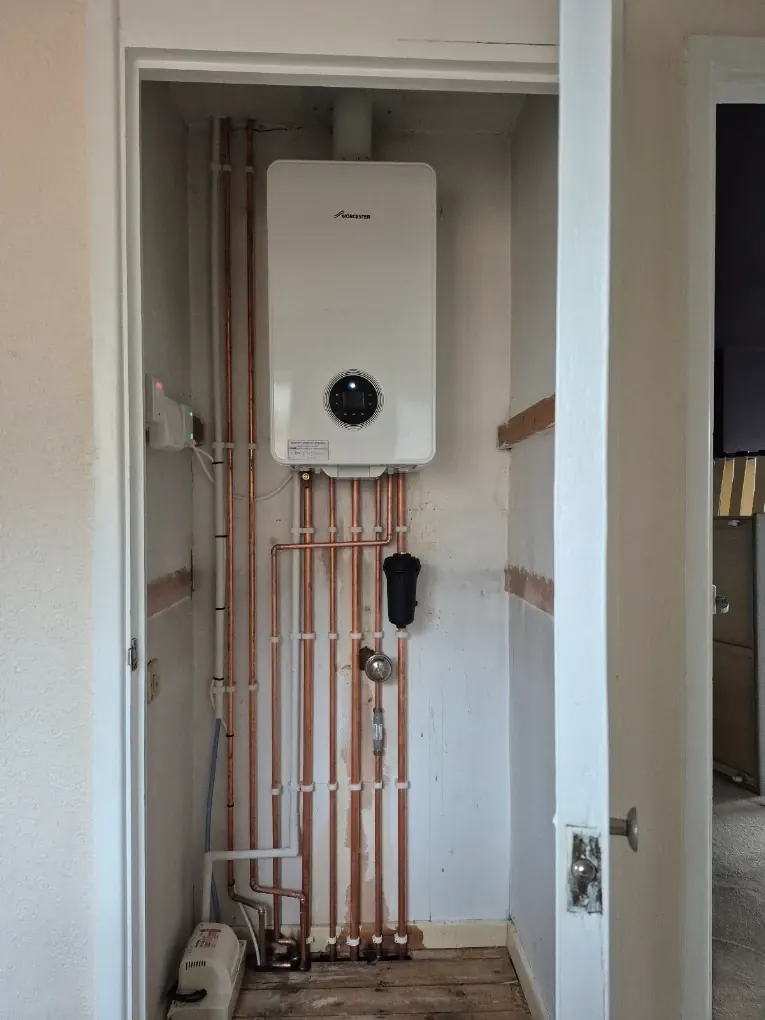
We connect a power flushing machine to your heating system and push water and cleaning chemicals through it at high flow, one radiator at a time, reversing the flow to break up deposits. Each radiator is worked until the water runs clear. Then we refill with fresh water, add inhibitor to slow corrosion down, and fit a magnetic filter if there isn't one already. Most homes take a day.
Before a new boiler goes in
Boiler manufacturers expect the system to be cleaned before a new boiler is connected, in line with the BS 7593 code of practice. Sometimes a chemical clean is enough. Sometimes the system is bad enough to need a full power flush. We'll show you what comes out at the survey and explain which your system needs. See how this fits into a new boiler installation.
Worth knowing: power flushing isn't a cure for everything. If a radiator is corroded through, flushing it can find the weak spot. We check the system first and will tell you when replacing a radiator makes more sense than flushing it.
We power flush heating systems across Warwick, Leamington Spa, Kenilworth, Wellesbourne and Stratford-upon-Avon, plus the villages in between.